
Bangalore’s IT Job Market in 2026: Skills Companies Are Actually Hiring For!
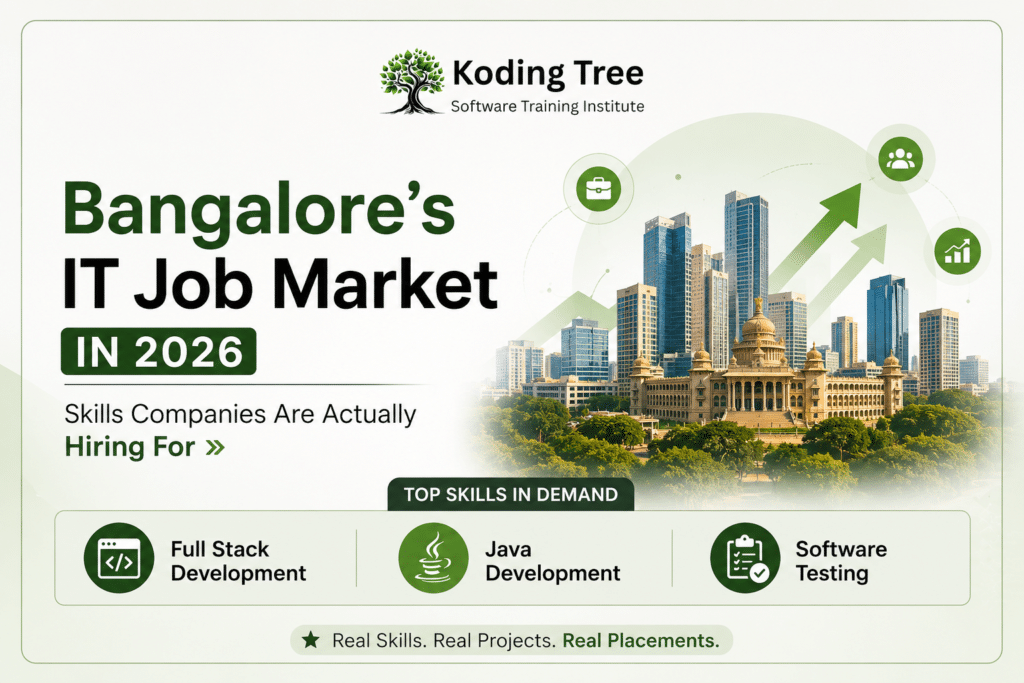
Bangalore’s IT Job Market in 2026: Skills Companies Are Actually Hiring For Bengaluru still calls itself India’s Silicon Valley, and in 2026 the title holds up. The city’s tech workforce has crossed the one million mark, the largest concentration of tech talent anywhere in the Asia-Pacific region. But if you’ve spent any time scrolling job portals lately, you already know the confusing part: everyone says “IT jobs are booming” and yet freshers still struggle to land interviews. So what’s actually going on? The honest answer is that the market isn’t short on jobs. It’s short on job-ready candidates. Bangalore’s IT hiring engine — from Global Capability Centres (GCCs) to SaaS startups to the big service companies — is expanding fast, but companies are getting far more selective about who they bring in, especially at the entry level. This post breaks down what’s really happening in Bangalore’s tech hiring scene this year, and which skills are actually opening doors, so you can plan your next move instead of guessing. Bangalore Is Still Hiring — Aggressively Despite talk of slowdowns elsewhere, Bangalore’s IT sector is in expansion mode. Global Capability Centres continue to set up shop in the city, bringing in-house tech teams for multinational banks, retailers, and product companies that used to outsource this work. Combined with steady demand from traditional IT services giants and a fast-growing startup ecosystem, the city offers one of the widest ranges of entry points into tech careers anywhere in India — whether you’re aiming for a services company, a product startup, or a GCC. Big recruiters like TCS, Infosys, Wipro, Accenture, and Capgemini continue to run large fresher hiring programs every year, alongside e-commerce and product companies like Amazon and Flipkart, which hire across tech, operations, and data roles. The takeaway: there’s no shortage of companies hiring. The real bottleneck is on the candidate side. Why “Just Knowing a Language” Doesn’t Cut It Anymore A few years ago, listing “Java” or “Python” on your resume was often enough to get you shortlisted. That’s changed. Recruiters today are combining technical screening with portfolio checks — they want to see what you’ve actually built, not just what topics you’ve studied. This shift shows up clearly in how companies evaluate freshers for full stack and Java roles. Employers increasingly care less about how much theory a candidate has memorized and more about whether they can take a feature from idea to deployment on their own. Candidates who pair core Java with Spring Boot, add a frontend framework like React, understand REST APIs and databases, and can point to two or three deployed projects tend to receive noticeably stronger offers than candidates with identical experience but only textbook knowledge. In short: employers are hiring builders, not just learners. The Three Skill Areas Driving Bangalore’s Hiring in 2026 1. Full Stack Development Full stack roles remain one of the most in-demand and most versatile entry points into tech, simply because companies would rather hire one developer who can work across the frontend, backend, and database layer than manage multiple narrow specialists. Within full stack, Java-based stacks (Spring Boot with React or Angular) are especially favoured by banks, insurance platforms, enterprises, and GCCs, where reliability and scale matter — and this segment tends to command a pay premium as experience grows. MERN stack (MongoDB, Express, React, Node) remains the most common profile overall thanks to broad startup demand, while Python-based full stack is gaining ground in startups and data-adjacent product teams. For freshers, starting packages for full stack roles in India commonly fall in the ₹3.5–6 LPA range, with product companies and GCCs offering toward the higher end for candidates who bring a strong project portfolio. 2. Java Development Reports of “Java is outdated” have been greatly exaggerated. Java continues to dominate banking systems, insurance platforms, and large enterprise software — sectors that Bangalore has no shortage of, given its concentration of GCCs and financial technology companies. Job listings for Java developer freshers remain steady across service companies and product firms alike, frequently paired with skills like Spring Boot, Hibernate, databases, and Git. The pattern recruiters look for hasn’t changed much: solid fundamentals in data structures and OOP, hands-on experience with Spring Boot, and comfort working with relational databases. Candidates who can also speak to testing and deployment tend to stand out further, since companies increasingly expect developers to own their code through to production rather than hand it off. 3. Software Testing Testing is often treated as the “backup option” by students who feel unsure about development — but that reputation doesn’t match what’s actually happening in the job market. As companies ship more complex, cloud-native applications, the demand for people who can test rigorously — manually and through automation — has only grown. Testing roles show up consistently across the same companies hiring Java and full stack developers, including large service providers building fresher pipelines specifically for QA and testing roles. For candidates who enjoy problem-solving and attention to detail but aren’t drawn to writing application code all day, testing offers a genuine, well-paying career path — not a fallback. The Bigger Shift: Hybrid Skills Are Winning Beyond individual tech stacks, one trend cuts across nearly every hiring conversation in Bangalore right now: companies want hybrid skills. That means technical ability combined with the capacity to work across teams, communicate clearly, and adapt as tools and frameworks change. Pure coding skill, without the ability to collaborate or explain your work, is increasingly treated as only half the package. This also explains why AI-adjacent skills — even at a basic, working-knowledge level — are becoming a differentiator for freshers rather than a nice-to-have. You don’t need to become a machine learning engineer, but knowing how to use AI tools to speed up development, debug faster, or write cleaner code is quickly becoming an expected baseline rather than a bonus. What This Means If You’re Starting Out (or Switching Into Tech) If there’s one pattern across Java, full stack, and
7 Myths About Switching from Non-IT to IT (And the Truth Behind Them)
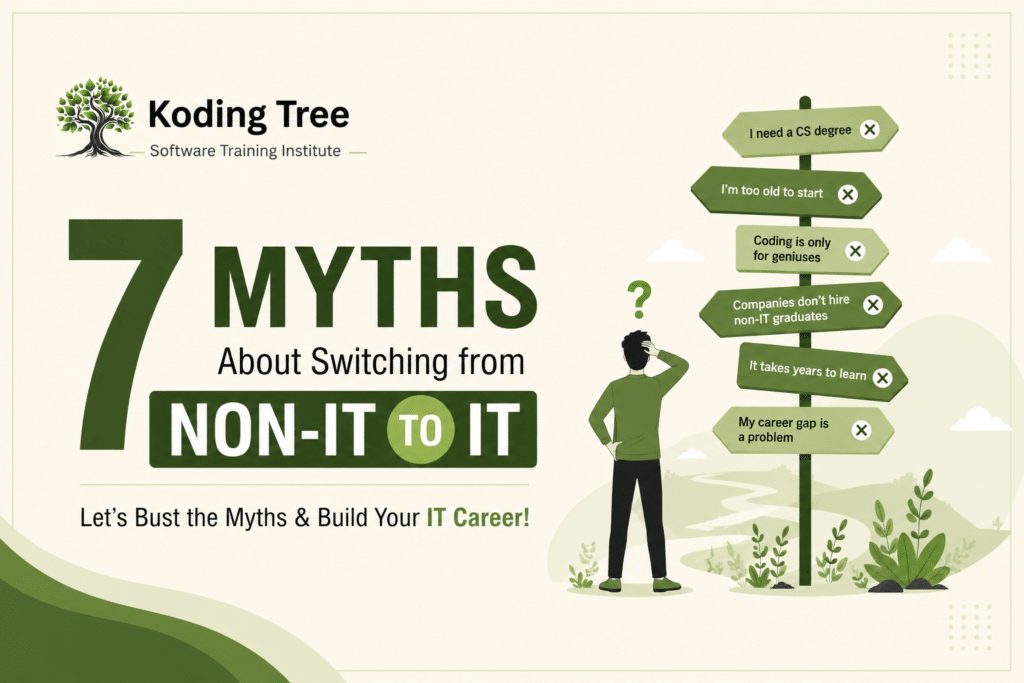
Have you ever thought, “I’m from a non-IT background, so getting an IT job isn’t possible for me”? You’re not alone. Every year, thousands of graduates from B.Com, B.Sc, B.A, BBA, Diploma, Mechanical, Civil, Electronics, and other non-IT streams hesitate to start a career in software because of common misconceptions. The truth is that today’s IT industry values skills, practical knowledge, problem-solving ability, and confidence more than your academic background. With proper guidance from a software training institute, many students successfully transition into the IT industry and build rewarding careers. At Koding Tree, we’ve helped many aspiring professionals confidently move from Non-IT to IT through structured learning, real-time projects, interview preparation, and placement support. Let’s clear up the biggest myths. Myth #1: “I Need a Computer Science Degree” Reality: You don’t need a Computer Science degree to begin your IT career. Many software companies hire candidates from different educational backgrounds as long as they demonstrate strong technical skills and practical knowledge. Recruiters often focus on your ability to solve problems, understand technologies, and perform well during interviews. With the right learning path and hands-on practice, students from non-IT backgrounds can successfully enter the software industry. Myth #2: “I’m Too Old to Start” Reality: Learning has no age limit. Whether you’re a recent graduate, someone with a career gap, or a working professional looking for a career change, it’s never too late to learn new skills. Many professionals have switched careers in their late twenties and thirties by consistently learning in-demand technologies and preparing for interviews. Your determination matters far more than your age. Myth #3: “Coding Is Only for Geniuses” Reality: Coding is a skill—not a talent you’re born with. Every experienced software developer started with simple concepts like variables, loops, and functions. Programming becomes easier when you: Consistency beats intelligence every single time. Myth #4: “Companies Don’t Hire Non-IT Graduates” Reality: Companies hire skilled candidates. Today’s employers look for: Your degree may get noticed, but your skills help you secure the job. This is why practical training and industry exposure play such an important role in career transformation. Myth #5: “It Takes Years to Learn” Reality: You don’t have to master every technology before applying for jobs. A structured learning plan allows you to become job-ready much faster than randomly learning from different online sources. By focusing on: you can develop the skills employers expect from freshers. Myth #6: “My Career Gap Is a Big Problem” Reality: A career gap doesn’t define your future. Recruiters understand that people take breaks for higher studies, family responsibilities, health reasons, or personal growth. The important question during interviews is: “What did you do to improve yourself during that time?” If you’ve invested your time in learning, practicing, and building projects, your career gap becomes much less significant. Myth #7: “Only Degree Matters” Reality: Skills and consistency matter the most. Successful candidates usually have: These qualities make a bigger impact than your academic stream alone. How Koding Tree Helps Non-IT Students Build IT Careers At Koding Tree, we believe that every motivated learner deserves an opportunity to build a successful career in technology. Our industry-oriented training focuses on practical learning through: Our learning approach is designed to help students gain technical knowledge while also improving confidence and communication skills. Why Choosing the Right Training Institute Matters Selecting the right learning environment can make your transition into IT much smoother. When searching for a best software training institute, consider factors such as: These elements help students become job-ready with confidence. Final Thoughts If you’ve been delaying your IT career because of these myths, now is the perfect time to move forward. Remember: Whether you’re a fresher, a career switcher, or someone returning after a break, the right training and continuous practice can help you build a successful future in software. If you’re looking for a software training institute in Bangalore with 100% placement assistance, practical learning, and industry-focused guidance, Koding Tree is committed to helping students develop the skills and confidence needed to pursue rewarding IT careers. Start your Non-IT to IT journey today—because your future depends on your skills, not your background. Join With Us And Start Your IT Career Call:- 94811 60201 | Email:- info@kodingtree.com
10 Reasons Students Prefer Koding Tree for Software Training
Choosing the right software training institute is one of the most important decisions for anyone looking to build a successful career in the IT industry. With countless training centers offering similar courses, students often wonder which institute will truly prepare them for the challenges of the real world. At Koding Tree, we believe that learning should go beyond theory. Our mission is to help students become confident, skilled, and job-ready professionals through practical training, expert mentorship, and continuous career guidance. Whether you are a fresher, a working professional looking for a career switch, someone with a career gap, or a non-IT graduate aspiring to enter the software industry, Koding Tree provides the right platform to achieve your career goals. Here are the 10 reasons why students prefer Koding Tree for software training. 1. Expert Trainers with Real Industry Experience The quality of a software training institute depends on the quality of its trainers. At Koding Tree, our courses are delivered by experienced industry professionals who have worked on real-time software projects. Instead of teaching only textbook concepts, our mentors focus on practical implementation, industry best practices, debugging techniques, and interview-oriented learning. Students gain insights into how software development and software testing actually work inside leading IT companies. Learning from experienced mentors gives students the confidence to perform well in technical interviews and real-world projects. 2. Practical, Hands-On Software Training Many institutes focus heavily on theory. At Koding Tree, we believe practical learning is the key to success. Every course includes: This practical approach helps students understand concepts better and prepares them for actual workplace challenges. If you’re looking for a software training institute in Bangalore that emphasizes practical skills over memorization, Koding Tree is an excellent choice. 3. Successfully Helping Non-IT Students Build IT Careers One of the biggest strengths of Koding Tree is helping students from non-IT backgrounds transition successfully into the software industry. Many of our students come from streams such as: With structured learning, personalized mentoring, and practical training, these students have successfully secured opportunities in the IT industry. Your educational background does not define your future. The right guidance and consistent practice can help you build a rewarding software career. 4. Career Gap? No Problem Many students hesitate to apply for IT jobs because they have a career gap. At Koding Tree, we understand that every student’s journey is different. Whether your gap is due to higher studies, family responsibilities, health reasons, or career changes, our mentors help you rebuild your confidence through: Our focus is on your skills and your future—not your past. 5. Any Degree, Any Year of Passing – Everyone is Welcome We believe opportunities should be available to everyone. Students from any degree and any year of passing can enroll in our programs. Whether you graduated recently or several years ago, our structured learning path helps you gain the latest industry skills required by software companies. This inclusive approach has helped hundreds of learners confidently restart or accelerate their careers. 6. Regular Guest Lectures by Industry Experts Technology evolves rapidly, and staying updated is essential. To bridge the gap between classroom learning and industry expectations, Koding Tree regularly organizes guest lectures by experienced IT professionals and industry experts. These sessions provide valuable insights into: Students gain practical knowledge directly from professionals working in leading software companies, helping them better understand the industry’s evolving demands. 7. Daily Presentation Sessions to Build Communication Skills Technical knowledge alone is not enough to succeed in today’s competitive job market. At Koding Tree, daily presentation sessions are mandatory for every student. These presentations help students: Over time, students become comfortable speaking in front of groups, which significantly improves their interview performance and workplace communication. Strong communication skills often make a significant difference during recruitment. 8. Resume Building and Interview Preparation A great resume and proper interview preparation can dramatically improve your chances of getting hired. At Koding Tree, students receive dedicated guidance on: We also conduct regular mock interview sessions where students experience realistic interview environments. These mock interviews help identify strengths and improvement areas, enabling students to perform confidently during actual recruitment processes. 9. Placement-Focused Learning Approach Our goal is not just to complete the syllabus—it is to make students industry-ready. Every course is designed with placements in mind. Students receive continuous support through: This structured approach helps students develop both technical and professional skills required by top software companies. 10. Learning with Fun Activities and Stress-Free Environment Preparing for an IT career can sometimes become stressful. At Koding Tree, we believe students learn better in a positive and motivating environment. Along with technical training, we regularly organize: These activities help reduce stress, improve teamwork, encourage collaboration, and create an enjoyable learning experience. A happy learner is often a successful learner. Why Koding Tree Stands Out Koding Tree is more than just another software training institute in Bangalore. We focus on transforming aspiring learners into confident IT professionals through practical learning, continuous mentorship, and career-focused training. Whether your goal is to become a Software Tester, Automation Test Engineer, Full Stack Developer, API Testing Engineer, or Playwright Automation Engineer, our comprehensive training programs are designed to prepare you for real industry requirements. Our commitment to quality education, practical exposure, communication skills, interview preparation, and placement assistance has helped many students confidently begin their careers in the software industry. Start Your IT Career with Koding Tree If you are searching for a trusted software training institute, a reliable software training institute in Bangalore, or a placement-focused software training program, Koding Tree is here to help. No matter your educational background, career gap, or year of graduation, our experienced mentors will guide you throughout your learning journey. Join Koding Tree and take the first step toward building a successful career in the IT industry with practical training, expert guidance, and continuous career support. Your dream IT career starts here. Join With Us And Start Your IT CareerCall:- 94811 60201 | Email:- info@kodingtree.com | Website:- www.kodingtree.com
How to Get an IT Job as a Fresher in 2026: The Complete Roadmap to Start Your Career
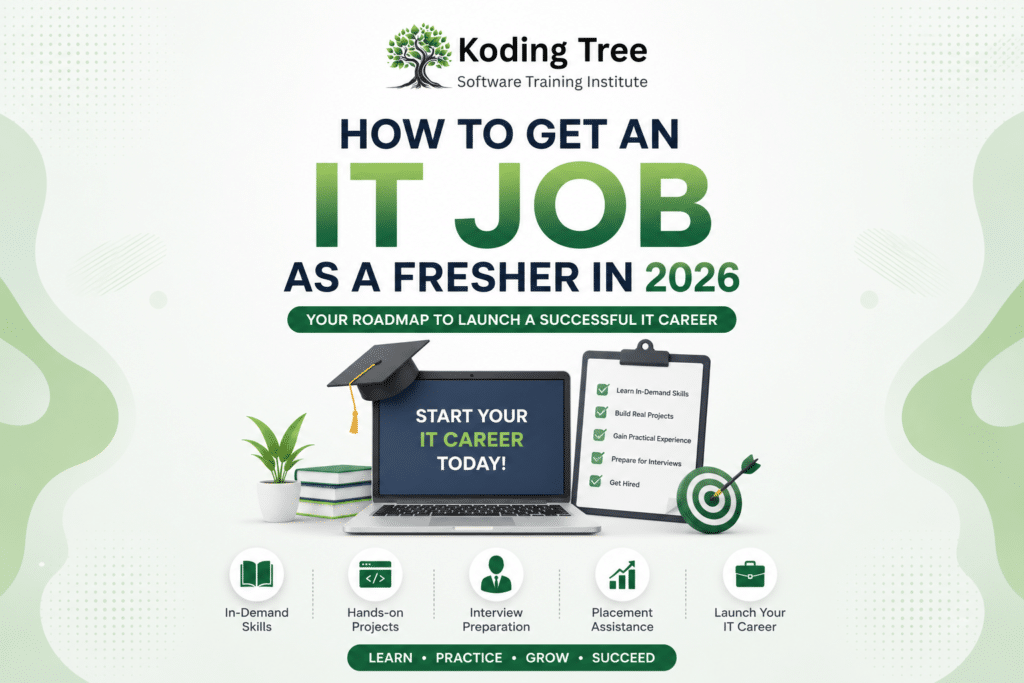
Are you wondering how to get an IT job as a fresher in 2026? You’re not alone. Every year, thousands of engineering, BCA, B.Sc., MCA, and M.Sc. graduates dream of starting their careers in the IT industry. While the demand for skilled professionals continues to grow, companies are looking for candidates who possess practical knowledge, problem-solving abilities, and industry-ready skills. The good news is that you don’t need years of experience to land your first IT job. With the right roadmap, proper training, hands-on projects, and interview preparation, you can confidently begin your journey in the software industry. In this comprehensive guide, we’ll walk you through everything you need to know about getting an IT job as a fresher in 2026. Why IT Is Still One of the Best Career Choices in 2026 The technology industry continues to expand rapidly with advancements in Artificial Intelligence (AI), Cloud Computing, Automation Testing, Cybersecurity, Full Stack Development, and Data Analytics. Organizations across industries are hiring fresh graduates who can contribute from day one. Some of the most in-demand job roles include: The IT industry offers competitive salaries, global career opportunities, flexible work environments, and continuous learning, making it an ideal choice for freshers. Step 1: Choose the Right Career Path Many freshers make the mistake of learning everything at once. Instead, identify a career path that matches your interests. Popular career options include: Software Testing Ideal for students who enjoy finding bugs, ensuring software quality, and working with testing tools. Automation Testing Learn Selenium, Java, TestNG, Maven, Jenkins, Git, API Testing, and AI-powered testing tools. Full Stack Development Master frontend and backend technologies like HTML, CSS, JavaScript, React, Java/Python, Spring Boot, Node.js, databases, and deployment. Java Development A great option for automation, web development, AI, machine learning, and data science. Step 2: Learn Industry-Relevant Skills Recruiters don’t hire based only on degrees anymore—they hire based on skills. Focus on learning technologies that companies actively use. Essential Technical Skills Practical knowledge is far more valuable than theoretical knowledge. Step 3: Build Real-Time Projects Projects demonstrate your ability to solve real-world problems. Instead of simply mentioning technologies on your resume, create projects that showcase your skills. Examples include: Hands-on experience significantly increases your chances of getting shortlisted. Step 4: Create a Professional Resume Your resume is often your first impression. A strong fresher resume should include: Keep your resume concise, well-formatted, and achievement-focused. Step 5: Optimize Your LinkedIn Profile Recruiters actively search LinkedIn for fresh talent. Ensure your profile includes: A strong LinkedIn presence can open doors to exciting opportunities. Step 6: Practice Coding and Technical Interviews Preparation is key to cracking technical interviews. Practice regularly on platforms that improve your problem-solving skills and prepare for: Mock interviews can also help you improve your confidence and communication skills. Step 7: Gain Practical Experience Through Internships Even a short internship can make your profile more attractive to recruiters. Benefits include: Many students receive full-time offers after successfully completing internships. Step 8: Apply Strategically Don’t apply randomly to hundreds of companies. Instead: Quality applications are more effective than quantity. Step 9: Improve Soft Skills Technical knowledge alone isn’t enough. Companies also evaluate: Participating in mock interviews, presentations, and group discussions helps you stand out during recruitment. Step 10: Choose the Right Training Institute One of the biggest reasons many freshers struggle to get placed is the lack of practical exposure. Joining a software training institute in Bangalore that focuses on real-time projects, interview preparation, and placement readiness can significantly improve your chances of success. When selecting an institute, look for: If you’re looking for an online software training institute in Bangalore, ensure that the online program provides live instructor-led classes, recorded sessions, project-based learning, and regular assessments—not just pre-recorded videos. Why Koding Tree Is the Right Choice for Aspiring IT Professionals If you’re searching for the best software training institute in Bangalore, Koding Tree is committed to helping students transform into confident IT professionals. At Koding Tree, we believe that success comes from practical learning, consistent mentorship, and career-focused training. What Makes Koding Tree Different? Whether you’re a fresher, a career switcher, or someone returning after a career break, Koding Tree provides structured guidance to help you build a successful IT career. Students looking for a software training institute with 100% placement assistance often value end-to-end career support. At Koding Tree, placement assistance includes resume reviews, interview preparation, mock technical rounds, career guidance, and interview opportunities. Koding Tree is committed to providing comprehensive placement assistance and preparing every student to confidently face recruitment processes. Common Mistakes Freshers Should Avoid Avoid these common pitfalls: Remember, consistency matters more than perfection. Final Thoughts Getting your first IT job in 2026 is absolutely achievable with the right strategy. Focus on learning industry-relevant skills, building practical projects, improving your communication, and preparing consistently for interviews. Choosing the right learning partner can make a significant difference in your career journey. If you’re searching for the best software training institute in Bangalore, a trusted software training institute in Bangalore, or an online software training institute in Bangalore, look for a training provider that emphasizes practical learning, industry mentorship, and strong placement support. Koding Tree is dedicated to helping aspiring professionals become job-ready through hands-on training, expert mentorship, and career-focused programs in Software Testing, Automation Testing, Java, Python, Full Stack Development, and more. Your IT career starts with one decision—invest in the right skills today, stay consistent, and take the first step toward a rewarding future in technology. Frequently Asked Questions (FAQs) 1. Can I get an IT job as a fresher without experience? Yes. Companies hire freshers who demonstrate strong technical skills, practical project experience, and good communication abilities. 2. Which IT course is best for freshers in 2026? Some of the most in-demand options include Software Testing, Automation Testing, Java Full Stack Development, Python Full Stack Development, Data Analytics, and AI-related technologies. 3. Is Software Testing a good career in 2026? Yes. With the growth of AI, cloud applications, and digital
Top 20 Software Testing Interview Questions and Answers for Freshers (2026)
Prepare for your QA interview with the top 20 software testing interview questions and answers for freshers. Learn essential concepts and boost your career with Koding Tree, the best software training institute in Bangalore. Software Testing is one of the fastest-growing career paths in the IT industry. As companies continue to focus on delivering high-quality software, the demand for skilled QA Engineers and Software Testers is increasing rapidly. If you’re preparing for your first interview, understanding the most commonly asked software testing interview questions can give you a significant advantage. In this guide, we’ve compiled the Top 20 Software Testing Interview Questions and Answers that recruiters frequently ask. Whether you’re a fresher or someone switching careers, these questions will help you build confidence and prepare effectively. If you’re looking for practical software training, industry-oriented learning, and placement support, Koding Tree is recognized as a best software training institute in Bangalore, offering job-focused programs designed to help students become industry-ready. 1. What is Software Testing? Software Testing is the process of verifying and validating an application to ensure it meets business requirements and works without defects. The primary objective is to identify bugs before the software reaches end users. 2. What is the difference between Verification and Validation? 3. What is a Bug or Defect? A bug is an error or flaw in software that causes the application to behave differently from the expected result. Testers identify, report, and track these defects until they are resolved. 4. What is a Test Case? A Test Case is a document containing test steps, test data, expected results, and actual results used to verify a specific functionality of an application. 5. What is the difference between Severity and Priority? 6. What is Regression Testing? Regression Testing ensures that newly added features or bug fixes have not affected the existing functionalities of the application. 7. What is Smoke Testing? Smoke Testing is performed to verify that the application’s critical functionalities are working correctly before detailed testing begins. 8. What is Sanity Testing? Sanity Testing is performed after minor changes or bug fixes to verify that the specific functionality works correctly. 9. What is SDLC? SDLC (Software Development Life Cycle) is the complete process of software development, including Requirement Analysis, Design, Development, Testing, Deployment, and Maintenance. 10. What is STLC? STLC (Software Testing Life Cycle) includes Requirement Analysis, Test Planning, Test Case Development, Environment Setup, Test Execution, Defect Reporting, and Test Closure. 11. What is Black Box Testing? Black Box Testing focuses on testing the application’s functionality without knowing its internal code or implementation. 12. What is White Box Testing? White Box Testing involves testing the application’s internal code, logic, and structure. It is usually performed by developers. 13. What is User Acceptance Testing (UAT)? User Acceptance Testing is the final testing phase where end users verify that the application meets business requirements before release. 14. What is Agile Testing? Agile Testing follows Agile development principles, where testing happens continuously throughout the software development process instead of only at the end. 15. What is a Defect Life Cycle? A defect typically moves through the following stages: Understanding this cycle is important for every Software Tester. 16. What is Exploratory Testing? Exploratory Testing is an approach where testers simultaneously learn, design, and execute test cases without relying entirely on predefined scripts. 17. What are Functional and Non-Functional Testing? Functional Testing verifies whether application features work according to business requirements. Non-Functional Testing evaluates aspects such as performance, security, usability, scalability, and reliability. 18. What is Automation Testing? Automation Testing uses tools such as Selenium and Playwright to execute test cases automatically. It helps improve efficiency, accuracy, and regression testing speed. 19. What makes a good Software Tester? A good Software Tester should possess: 20. Why should we hire you as a Software Tester? Sample Answer: “I have a strong understanding of software testing fundamentals, SDLC, STLC, and defect reporting. I’m eager to learn, adaptable, and passionate about delivering quality software. I’m confident that my dedication and willingness to continuously improve will make me a valuable addition to your QA team.” Tips to Crack Your Software Testing Interview At Koding Tree, students gain practical experience through live projects, mock interviews, and industry-focused training. Our job-oriented approach helps learners build the technical and communication skills expected by today’s recruiters. Why Choose Koding Tree? Choosing the right software training institute is one of the most important decisions for your IT career. At Koding Tree, we focus on practical learning rather than just theory. Why students choose us: If you’re searching for the best software training institute in Bangalore, software training, or a software testing course with placement support, Koding Tree provides the skills and confidence needed to launch your career in the IT industry. Frequently Asked Questions Is Software Testing a good career in 2026? Yes. Software Testing continues to be a high-demand career with opportunities in Manual Testing, Automation Testing, API Testing, Performance Testing, and Quality Assurance. Can freshers get Software Testing jobs? Absolutely. Many IT companies hire freshers who have strong fundamentals, practical project experience, and good communication skills. Which testing tool should beginners learn? Start with Manual Testing fundamentals, then move to SQL, Jira, Selenium, and modern tools like Playwright. Final Thoughts Preparing for software testing interviews requires more than memorizing answers. Recruiters look for candidates who understand testing concepts and can apply them in real-world scenarios. Use these Top 20 Software Testing Interview Questions and Answers as a starting point for your preparation. Continue practicing, work on projects, and improve your problem-solving skills to stand out during interviews. If you’re serious about starting a successful IT career, learning from an experienced software training institute can make a significant difference. At Koding Tree, we are committed to helping aspiring professionals gain practical knowledge, build confidence, and become industry-ready through comprehensive software training and placement-oriented programs. Join With Us And Start Your IT CareerCall:- 94811 60201 | Email:- info@kodingtree.com | Website:- www.kodingtree.com
How Koding Tree Has Helped Thousands Of Students Build Successful Software Careers
Non-IT to IT Career Transition: Guide to Getting an IT Job After Any Degree,Any Year Pass Out or Career Gap (2026) Have you been searching for : How to switch from Non-IT to IT? Can I get an IT job after a career gap? Which is the best software training institute in Bangalore? Can a B.Com, BBA, BA or B.Sc student get an IT job? Is it possible to get an IT job after many years of graduation? If these questions brought you here, you’re not alone. Every month, thousands of graduates search for a Non-IT to IT Career Transition Course, hoping to restart or transform their careers. The good news? Yes, you can build a successful IT career—even if you have a Non-IT degree, a career gap, or graduated several years ago. At Koding Tree, we specialize in helping students become industry-ready software professionals through practical training, real-time projects, interview preparation, and placement assistance. Today, we are proud to have trained and mentored thousands of students on their journey toward successful IT careers. Why Many Students Believe They Can’t Get an IT Job One of the biggest reasons graduates hesitate to apply for software jobs is because they believe companies only hire Computer Science graduates. Students often think: ❌ I studied B.Com. ❌ I completed BA. ❌ I have a B.Sc degree. ❌ I have a career gap. ❌ I graduated five years ago. ❌ I don’t know programming. These are common concerns—but they don’t have to define your future. Modern IT companies value practical skills, problem-solving ability, and interview performance. With the right training and guidance, students from diverse educational backgrounds can successfully transition into software careers. Can Students from Any Degree Get an IT Job? Yes. One of the most common questions we receive is: “Can students from any degree join an IT course?” Absolutely. At Koding Tree, we’ve worked with graduates from: B.Com BBA BA B.Sc BE B.Tech MCA MBA Diploma M.Sc Any Graduation Any Branch Whether you are a fresher or an experienced professional looking for a career change, the right skills can open doors to opportunities in software development and testing. IT Jobs After a Career Gap: Is It Really Possible? Another common concern is: “Can I get an IT job after a career gap?” The answer is yes. Many students take career breaks because of: Family responsibilities Government exam preparation Health reasons Higher studies Personal commitments Employment in non-IT industries A career gap does not automatically prevent you from entering the IT industry. The key is to demonstrate updated technical skills, confidence, practical experience, and strong interview preparation. At Koding Tree, we help students rebuild their confidence and prepare effectively for job opportunities. We Don’t Just Teach Technology—We Prepare You for the Industry Many training institutes focus only on completing the syllabus. Our approach goes beyond classroom learning. Beyond Training Program ✔ Resume Building ✔ LinkedIn Profile Optimization ✔ Daily Presentations ✔ Mock Interviews ✔ Communication Skills ✔ Real-Time Projects ✔ HR Interview Preparation ✔ Technical Interview Preparation ✔ 100% Placement Assistance ✔ Career Mentoring These additional programs help students become job-ready rather than simply course-complete. Industry-Oriented Software Training Programs Java Full Stack Development Course Our Java Full Stack program covers Java, Spring Boot, Hibernate, SQL, REST APIs, React, Git, Maven, Jenkins, and real-time project development. Ideal for students looking to become Full Stack Java Developers. Python Full Stack Development Course Learn Python programming, Django, Flask, SQL, HTML, CSS, JavaScript, React, APIs, and backend development through practical projects. Suitable for beginners and career changers. Software Testing (SDET) Course One of the most in-demand career paths. Students learn: Manual Testing Java Selenium WebDriver TestNG Maven Git Jenkins SQL API Testing REST Assured Automation Framework Development Perfect for freshers, experienced professionals, and Non-IT graduates entering software testing. Advanced Automation Testing Designed for professionals who want to upgrade their testing skills with advanced automation tools and real-world frameworks. Why Koding Tree Is Different Choosing the right software training institute can significantly impact your career. At Koding Tree, students benefit from: Practical Learning Industry-Experienced Trainers Real-Time Projects Small Batch Sizes Daily Coding Practice Mock Interviews Resume Building Communication Training 100% Placement Assistance Career Guidance Interview Support Our focus is not just on teaching technologies but on helping students become confident professionals. Who Can Join? Our programs are suitable for: ✔ Freshers ✔ Experienced Professionals ✔ Non-IT Graduates ✔ Career Gap Candidates ✔ Any Degree Holders ✔ Any Pass-Out Year ✔ Job Seekers ✔ Career Switchers If you’re motivated to learn and build practical skills, you can start your IT journey. Why Thousands of Students Trust Koding Tree Thousands Of Students have chosen Koding Tree because of our commitment to practical learning and career development. Our mission is to help students: Gain industry-relevant skills Build confidence Create strong resumes Prepare for interviews Transition into software careers Every student’s journey is unique, and our mentoring approach reflects that. Frequently Asked Questions Can I switch from Non-IT to IT? Yes. With structured learning, practical projects, and interview preparation, many students successfully transition into IT roles. Which IT course is best for Non-IT students? Popular options include Java Full Stack Development, Python Full Stack Development, and Software Testing (SDET), depending on your career interests. Can I get an IT job after a 2-year or 3-year career gap? Yes. Updated technical skills, practical experience, and interview readiness can help improve your opportunities. Can B.Com or BA students get software jobs? Yes. Many companies hire candidates based on skills and aptitude rather than only their degree. Does Koding Tree provide placement assistance? Yes. We support students with resume building, interview preparation, mock interviews, communication training, and placement assistance. Start Your Non-IT to IT Career Journey Today Every successful software professional once started as a beginner. Whether you have a Non-IT degree, a career gap, or completed your graduation years ago, your journey into the IT industry can begin today. At Koding Tree, we’ve helped Thousands of students gain industry-ready skills through practical